How Authentication Changes the Price of a Kansas Error Quarter
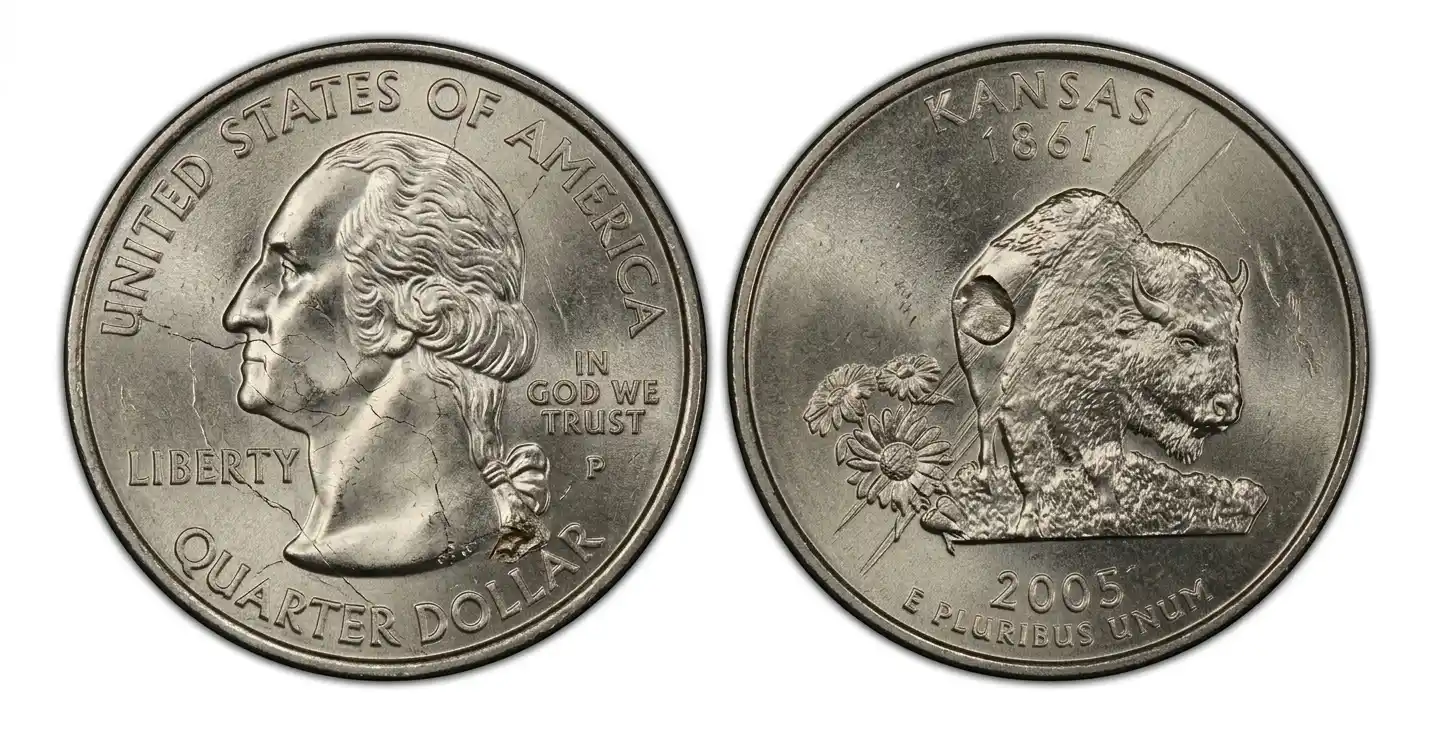
Professional certification often determines whether an unusual strike remains merely interesting or becomes a significant financial asset.
Unauthenticated coins showing potential 2005 Kansas quarter errors frequently generate skepticism among buyers.
Technical Parameter | Specification |
Total weight | 5.67 grams |
Outside diameter | 24.26 millimeters |
Thickness | 1.75 millimeters |
Internal layer | Copper |
Outer layer | Nickel |
Edge style | Reeded |
Deviations from 100% of these standards indicate potential planchet errors or damage occurring after minting.
Professional graders verify these dimensions first during every authentication session.
Role of Certification in Market Valuation
Certification acts as a bridge between a seller and a skeptical buyer.
Professional grading services evaluate surface preservation, strike quality, and authenticity.
Coins lacking such validation carry inherent risks, depressing market potential by 50% or more.
Raw error coins trade at unpredictable levels.
Authenticated errors trade at established auction values.
Authentication provides 4 critical benefits.
Market liquidity enhancement
Guaranteed authenticity
Objective grade assignment
Long-term price protection
Buyers pay significant premiums for plastic holders carrying verified labels.
Analyzing the In God We Rust Error
Most collectors target this specific error above all others for this issue.
Die degradation resulting from extreme press pressure creates the famous In God We Rust variety.
Letter T loses clarity or disappears entirely during the minting process.
This defect occurs due to metal flowing into clogged or damaged die recesses.
Detailed market dynamics for this specific error:
2024 price: $15.00 per piece
2025 price: $28.00 per piece
2026 price: $45.00 per piece
Specimens showing the most extreme loss of the letter command the highest possible price.
Grading Scales and Numerical Impact
Numerical grades represent the final assessment of a coin surface condition.
Professional graders use a scale from 1 to 70.
Certification Grade | 2024 price | 2025 price | 2026 price |
MS65 | $25.00 | $35.00 | $50.00 |
MS66 | $50.00 | $75.00 | $110.00 |
MS67 | $150.00 | $220.00 | $320.00 |
MS68 | $450.00 | $650.00 | $950.00 |
Price growth accelerates exponentially for coins reaching the MS68 designation.
Grade difference of 2 points frequently triples total financial value.
Market Dynamics and Investment Trends
Statistical analysis confirms stable interest regarding certified 2005 error coins.
High-grade survivors generate competitive bidding at all major auction houses.
Demand factors influence current trading levels.
Limited supply of high-grade pieces
Growing collector base
Reliable historical documentation
Investment capital placed in certified specimens demonstrates 15% to 25% resilience against inflation.
Circulated, uncertified examples fail to hold significant investment appeal.
Accumulating rare varieties requires 100% systematic patience and financial discipline.
Professional Storage Procedures
Maintaining certification grade requires strict environmental controls.
Copper and nickel surfaces remain sensitive to atmospheric conditions.
Effective preservation strategies involve 3 specific actions.
Humidity control
Dark environment storage
Avoidance of plastic softeners
Inert materials prevent 100% of the development of harmful corrosion spots on coin surfaces.
Materials containing chemical softeners cause irreversible damage to the outer nickel layer.
Staged collections require climate-controlled vaults for maximum asset protection.
Proper storage maintains original mint luster for future resale.
Search Tactics for Circulation Errors
Finding valuable error coins requires 1 disciplined approach.
Systematic searching involves 4 steps.
Opening bank-sealed rolls
Coin Identifier usage
Edge inspection
Surface detail verification
Searching through circulation provides affordable access to potential treasures.
Volume represents 100% of the key factor for successful searching.
Finding 1 MS67 error specimen justifies time spent on 1000s of base-level coins.
Expertise grows directly from reviewing 1000s of minted material.
Understanding Certification Costs
Certification services involve specific financial considerations.
Grading fees vary depending on service level and coin value.
Appraisers charge based on time required for detailed microscopic analysis.
Cost-benefit analysis determines feasibility of submitting low-value coins.
Submission calculation:
Total cost of grading → $30.00 to $60.00
Potential market value of coin → $10.00 to $20.00
Economic logic dictates holding only high-potential coins for professional grading.
Sending ordinary examples leads to negative financial results.
Impact of Die Wear on Value
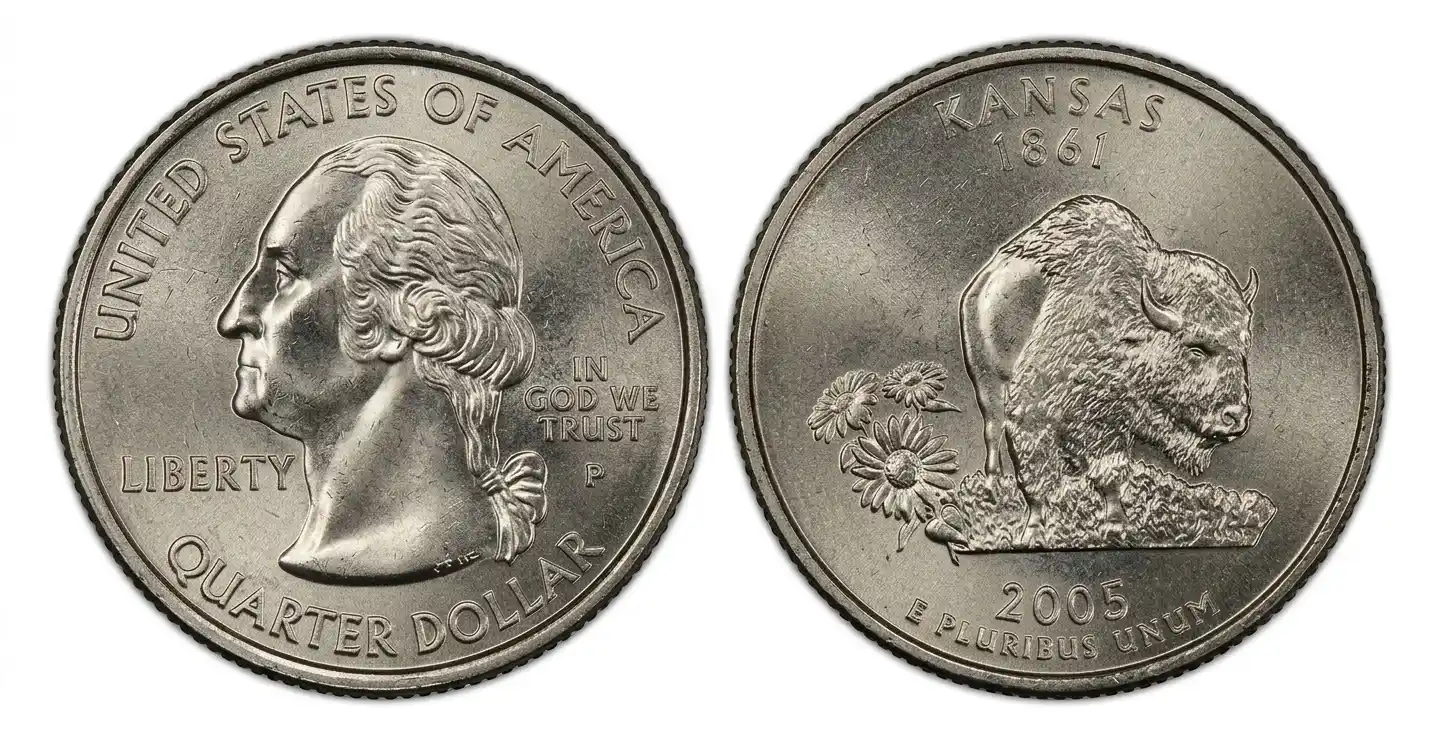
Die wear provides clues regarding scarcity of 1 error.
Late-stage die errors show less crisp detail but often represent rare stages of manufacturing failure.
Collectors prioritize errors featuring sharp, bold strike characteristics.
Blurry or poorly defined errors attract 50% fewer bidders.
Market interest aligns with 100% clear, identifiable defect patterns.
Comparing errors across different sessions helps identify best investment pieces.
Professional graders note these nuances on certification labels.
Historical Auction Data Analysis
Historical sales data reveals trends for top-tier Kansas error coins.
Auction results from 2024 show 1 steady climb in realization prices.
Major platforms record 10% to 20% consistent growth for MS67+ specimens.
Statistical trends:
Rising interest in major error types
Decreased frequency of high-grade lots
Price stability in volatile economic times
Professional buyers utilize these trends for building long-term portfolios.
Every auction provides 100% new data for refining valuation models.
Evaluating Surface Damage vs Mint Error
Distinguishing between damage and genuine error remains critical.
Professional free coin apps easily detect post-mint damage caused by tools or environmental exposure.
Damage features:
Shiny scratches
Irregular gouges
Non-uniform edge wear
Genuine errors feature consistent, logical strike characteristics.
Understanding this distinction saves 100% of capital during purchasing.
Avoiding damaged coins preserves capital for authentic error varieties.
Professional Networking and Education
Accessing closed information benefits 100% of serious market participants.
Collector clubs provide opportunities for sharing expertise.
Direct communication with professional graders clarifies edge-case decisions.
Educational resources help avoid 90% of common acquisition mistakes.
Continuous learning improves 100% of the ability to spot value.
Expert guidance remains 1 valuable resource for expensive acquisitions.
Popular posts